Lifelong Learning for the Elderly
Paper based on a presentation made at
18th AISCCON National Conference, Hyderabad
29th-30th Nov 2018
By DR P Vyasamoorthy
<vyasamoorthy@gmail.com>
1.Scope of the paper
In this article we will
discuss WHAT is Lifelong learning, how it is different from formal learning in an
academic set up; also find out advantages of LLL for senior citizens and why we
should be interested in it at all in the first place. Then we will explore
various sources – resources – and online platforms available for LLL; Only site
names will be given – we won’t go into details of each resource. Therafter the Concept
of U3A, its origin and history in India ,
U3A groups etc will be seen in the context of LLL. Just to inspire and motivate you, examples of
a few lifelong learners and what they have done will be mentioned. If you are
motivated enough to go ahead and do something tangible to promote LLL what is
it that any of us can do? This question
is answered in a brief list. Finally it
is emphasized that we are interested in
the elderly, retired people, pensioners or simple put 60+ age group only. We
are not concerned with LLL for students, Teachers, Workers, Women or others.
2. What is Lifelong Learning?
It is, simply put, learning
all the time without restriction of age. Imagining that learning stops after
school or college is incorrect. It happens all the time in invisible ways. As
far as senior citizens are concerned we are thinking of learning for learning
sake. No certificate, no monetary gain or employment in expected. Learning to
keep brain cells active is the only motive. It is purposeful organized
learning. It may be informal, online, or typical classroom sessions. Any
organized learning activity either for one-self or for a group of elderly
persons would fall under our scope.
3. Why LLL is important for
Senior Citizens?
•
First of all LLL
improves cognitive skills and prevents or delays the onset of dementia or
Alzheimer’s disease.
•
Secondly, it is a
remedy for boredom, loneliness and depression.
•
Thirdly, LLL improves
cognitive health – prevents / delays dementia
•
LLL improves self
confidence, employability, usefulness to self / others
•
It puts you in
company of other learners – motivation to live longer, happier and healthier
are possible.
•
LLL, according to
SH Subrahmanyam,
•
Broadens your
horizon
•
Helps understand
ourselves better
•
Improves native /
hidden talents
•
Helps ignore or forget age related issues
•
Gives a purpose
to go on
What else do you need? If
interested read his full paper here:
4. Resources for Lifelong
Learning
Now that you know how LLL is
useful or the Why of it, you would like to know where you can learn. One great
source is Internet or the web. There are a large number of learning sites. Some
notable examples are: Udacity, Udemy, Coursera, Mental Floss, Learnist, MIT
open courseware, Future Learn are important platforms for online courses,
mostly free. In Google simply type site
name fragments, you can locate the URL.
Not yet motivated? See this three minutes video: https://youtu.be/uZqJN2-qHjQ
Are you interested In
FaceBook? Learn what, when and how to use FB by seeing these videos:
5. University of Third Age OR
U3A
U3A stands for University of
Third Age. Usually it is a small group of interested learners, learning as a
group as against individuals. They meet often to listen to some lecture or
learn something practical, see a demo etc.
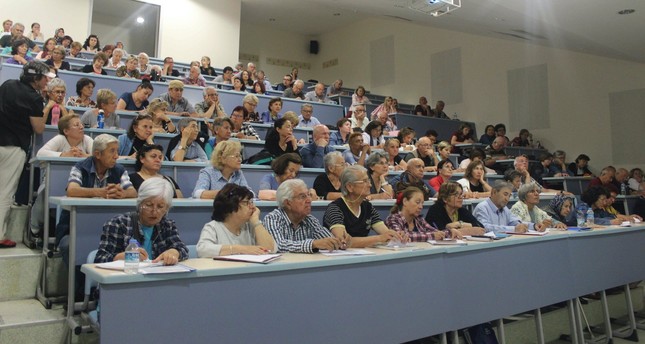
For example there is one U3A group called Sthree Gyan U3A in Hyderabad.
It is a group of 12 ladies. They meet regularly on Third Friday of every month.
The purpose is to learn something useful and interesting. Some of the things
they learnt or activities they did are like: Knitting, making tote bags, making
liquid soap, new recipes for cooking, lectures on spirituality, women specific
health issues, caring for the sick elderly etc. Another U3A group conducted a
Smartphone usage course for senior citizens for getting hands on experience.
In India U3A activity is
about 8 years old. There are more than thirty u3a groups and some 1200 plus
senior citizens in U3A in India. All those interested in U3A activity are
members of an all India body called Indian Society of U3As based in Udaipur.
You may get more details from the following links:
Couple of years ago, some 150
members, mostly belonging to Karnataka, formed a group called: U3AIndia. http://u3aindia.com/about.php It is a splinter group or a break away group with a
confusingly similar name.
6. Other Sources / places to
learn
Apart from U3As there are
many other websites that help you learn. Swaya..gov.in gives plenty of courses
to sign up. Another website http://epgo.inflibnet.ac.in helps students of College and PG level books
presentations course notes exam papers are aplenty. There is one Dr YN Rao who
is ready to send one Sanskrit lesson by email every week and help anyone learn
Sanskrit – you can enjoy bajans, music, vedic texts by appreciating them more
if you know Sanskrit.
MHRD has put in place with
the help of IIT Kharagpur a very useful site called National Digital Library of
India. You get access to softcopy of
several Lakh of books Thesis, Presentations, Question Papers & Solutions,
Reports, Manuals, Albums, Audio and Video, Data etc from NCERT NPTL Krishikosh
INFLIBNRT LIBRIVOX and others. What these acronyms mean, please look up if
interested. That will be a learning in itself. https://ndl.iitkgp.ac.in/
7. Some Examples of Lifelong
Learners
·
Ms Peng Nan from
China, at the age of 97, took ten new topics to learn this April 2018. She,
after retirement, for the past 32 years has completed some twenty courses!
•
Kerala is proud of
Mrs Karthiyayini in Cochin who is
96 year old lady who completed adult
literacy exam last month scoring 98% –
one among 76 senior citizens who completed literacy program. Proves to the that
age is no bar to start learning!
•
Lifelong
Learners whom you may know:
•
MK Raina, SV
Ramana, A Suryanarayana, Avinash Lakare, Vyasamoorthy have done a number of
online courses in the last one year.
•
Sarojini
Narasimhan (84) is one of the several senior Citizens doing the course in
Sanskrit
•
I was inspired by
one Sri T Thillainayagam. I was 28 and he was 42, Div Engineer, my boss, when I
was Library Assistant in Highways Research Station Madras. At that time he had more than a dozen degrees
and diplomas in civil, structural and highway engineering, statistics, social
welfare and library science! He was
instrumental in my getting a seat in BLibSc in Madras University!
•
My current
inspiration is Sri RN Mital. He is 92. He is an experiential learner. He
glorifies every moment of his living. Last month he organized a two day
National Conference in Hyderabad where 2000 delegates participated all
including mobilizing funds, scheduling the event, getting speakers, guiding
registration accommodation food etc!!! He is the chief patron of ISU3A and once
asked me to locate some online course in electronics to brush up what he learnt
seventy years ago in his B Tech course
8. What can we do to promote
LLL among the elderly?
•
Set up U3As and
nurture them. Even a handful of interested individuals is enough. Just enthuse
them to learn
•
Join ISU3A and
take part in discussion forum. Keep yourself updated.
•
Influence
universities to start courses for seniors exclusively; especially IGNOU,
distance, open, correspondence based ub\niversities. Ask them to start courses
for retired people
•
Conduct learning
sessions in SCAs. Such courses may be just for a few days. Chennai is doing
very well – they have already conducted more than ten smart phone courses
•
Spread awareness
by writing to media, in SCAs etc
•
Encourage
Learners by recognizing them; institute and give awards / certificates.
•
Fund causes given
above
•
Lastly, Be a
regular learner yourself and set an example